


Welcome to Sino Agro, One-stop Solution for All Your Agricultural Chemical Needs.
Fall armyworm
Maize (corn, popcorn) is a preferred host of fall armyworm (FAW) with a high risk of significant crop losses. The larval stage of armyworms can cause rapid,significant loss of leaf tissue in agricultural crops. Eggs are laid on plant foliage and newly-hatched larvae feed on the leaves, creating a windowing effect. Growing larvae prefer to hide in the whorl, damaging the developing leaves, which display a shot-hole pattern of holes as they emerge. In severe cases, the leaf may break off above the damaged area. If plants are infested very early in the vegetative stage and there is not much leaf present, larvae may hide in the soil at the base of the plant, where they can cause damage to the stem, or kill the young plant. Larval activity is higher at night.
The fall armyworm has four life stages: egg, larva, pupa, and adult. The adult moths are 32 to 40 millimetres wing tip to wing tip, with a brown or gray forewing, and a white hindwing. There is slight sexual dimorphism, with males having more patterns and a distinct white spot on each of their forewings. The first larval instar is light colored with a larger dark head. As they develop through instars, they become browner with white lengthwise lines. They also develop dark spots with spines. Fall armyworm caterpillars range in color from shades of brown to gray, green or yellow-green. Their most distinguishing characteristic is a whitish inverted Y between the eyes, and three whitish stripes on the pronotal shield behind the head.
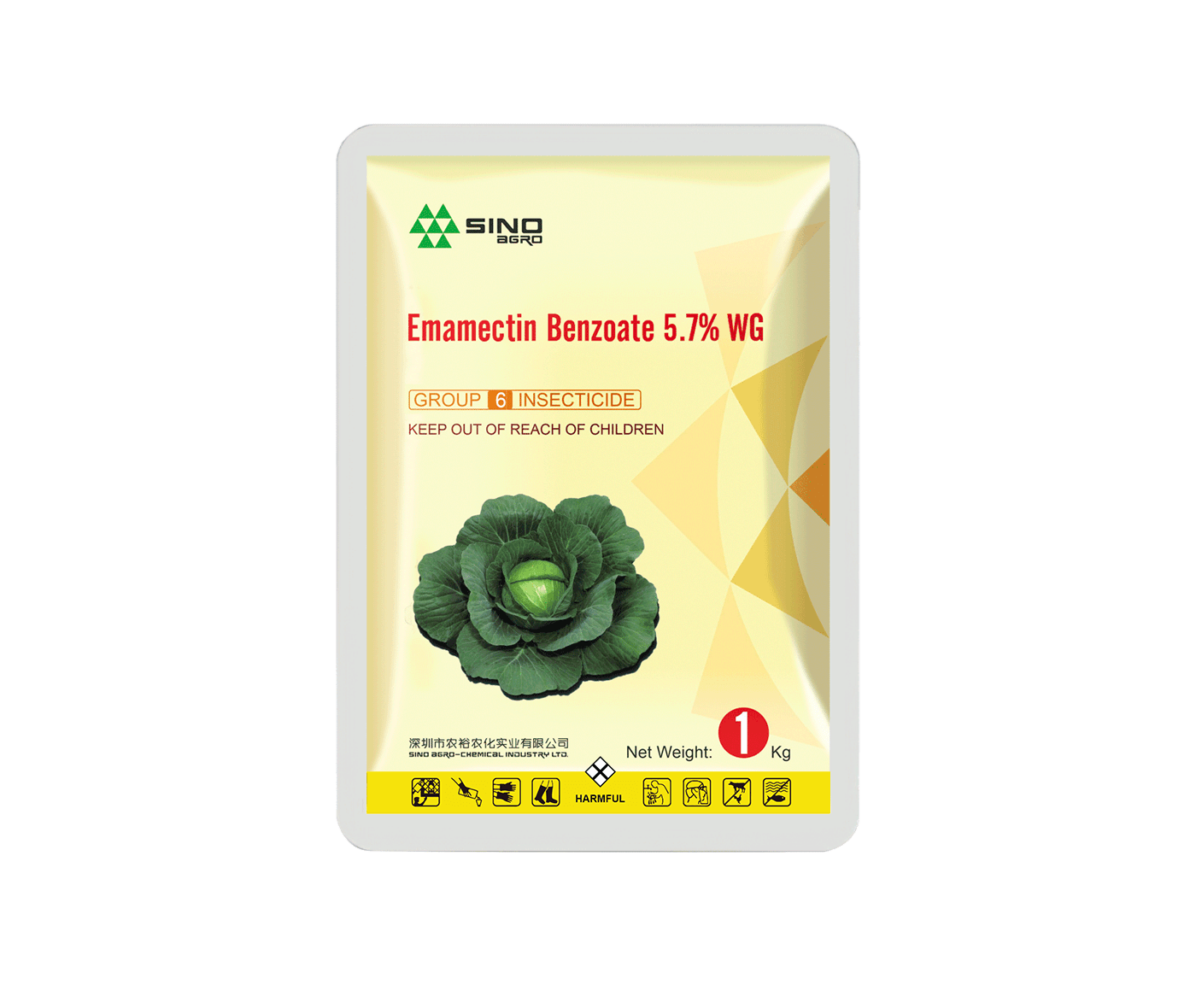
Emamectin Benzoate 5.7% WG


Do you have any questions?
We are here to help!
Send a message or speak to SINO AGRO about your need and you shall certainly have the right feedback.

Need Help :
Rm.2204-05, Tower 4, Excellence Century Center, Fuhua 3rd Rd., Shenzhen, P.R.China
-
Email: General Manager
-
sales@sinoagrochem.com.cn
CopyRight © 2023-2034 SINO AGRO-CHEMICAL INDUSTRY LTD. All Rights Reserved.
APVMA
IRAC
FRAC
HRAC
EFSA
CIPAC
EPA
FAO