


Welcome to Sino Agro, One-stop Solution for All Your Agricultural Chemical Needs.
Sheath Blight
Rice-sheath blight is a disease caused by Rhizoctonia solani (teleomorph is Thanetophorus cucumeris), a basidiomycete, that causes major limitations on rice production in India and other countries of Asia.It can decrease yield up to 50%, and reduce its quality. It causes lesions on the rice plant, and can also cause pre- and post-emergence seedling blight, banded leaf blight, panicle infection and spotted seed.
Symptoms are usually observed from tillering to milk stage in a rice crop and include the following:
oval or ellipsoidal greenish gray lesions, usually 1-3 cm long, on the leaf sheath, initially just above the soil or water level in the case of conventionally flooded rice.
under favorable conditions, these initial lesions multiply and expand to the upper part of the sheaths, the leaves, and then spread to neighboring tillers belonging to different hills (transplanted rice) or plants (direct-seeded rice).
lesions on the leaves usually have irregular lesions, often with gray-white centers and brown margins as they grow older.
in subtropical environments, the disease is mostly initiated by sclerotia (up to two million of which can be produced per square meter in a diseased crop).

Azoxystrobin 20% + Difenoconazole 12.5% SC
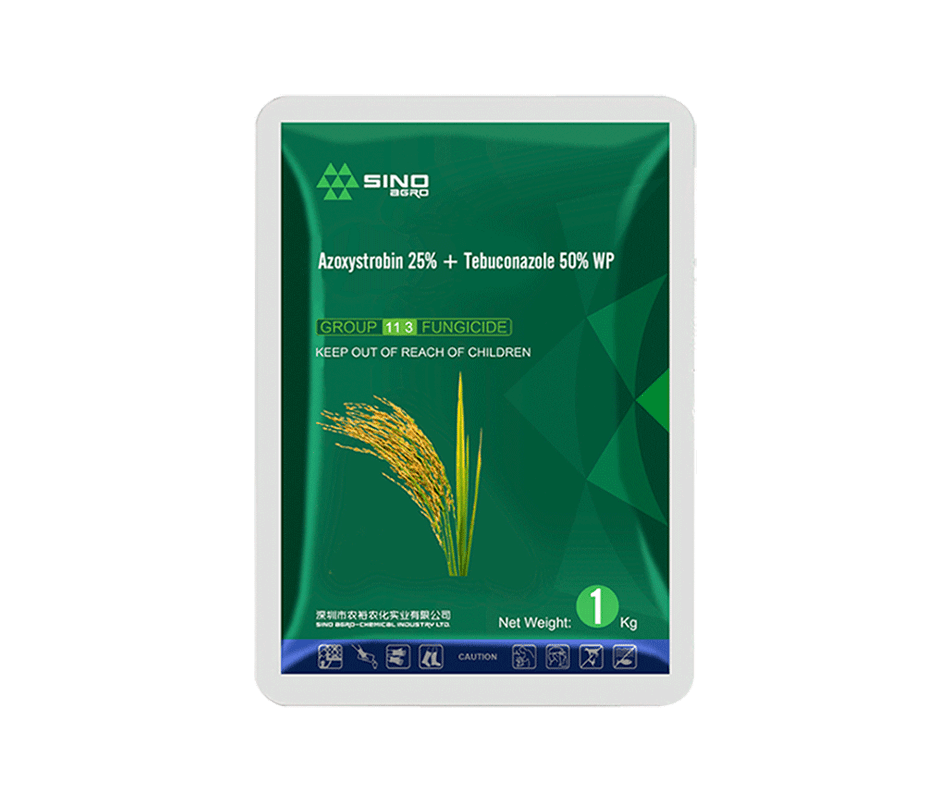
Azoxystrobin 25% + Tebuconazole 50% WP

Tebuconazole 50% + Trifloxystrobin 25% WG
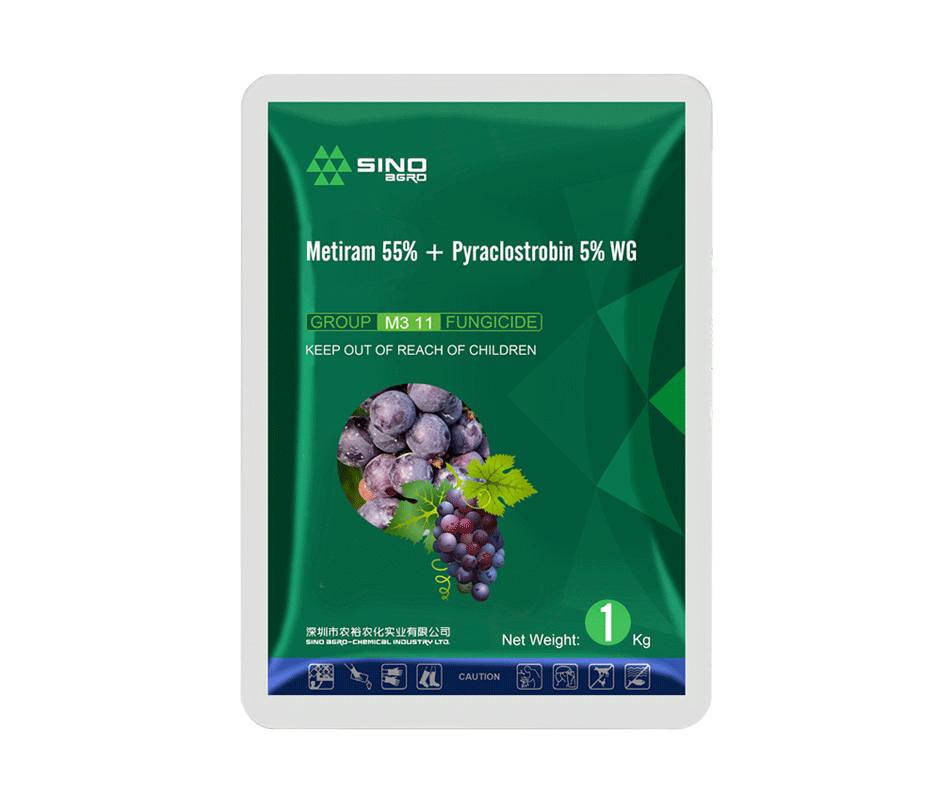
Metiram 55% + Pyraclostrobin 5% WG

Propiconazole 125g/L + Tricyclazole 400g/L SC


Do you have any questions?
We are here to help!
Send a message or speak to SINO AGRO about your need and you shall certainly have the right feedback.

Need Help :
Rm.2204-05, Tower 4, Excellence Century Center, Fuhua 3rd Rd., Shenzhen, P.R.China
-
Email: General Manager
-
sales@sinoagrochem.com.cn
CopyRight © 2023-2034 SINO AGRO-CHEMICAL INDUSTRY LTD. All Rights Reserved.
APVMA
IRAC
FRAC
HRAC
EFSA
CIPAC
EPA
FAO